
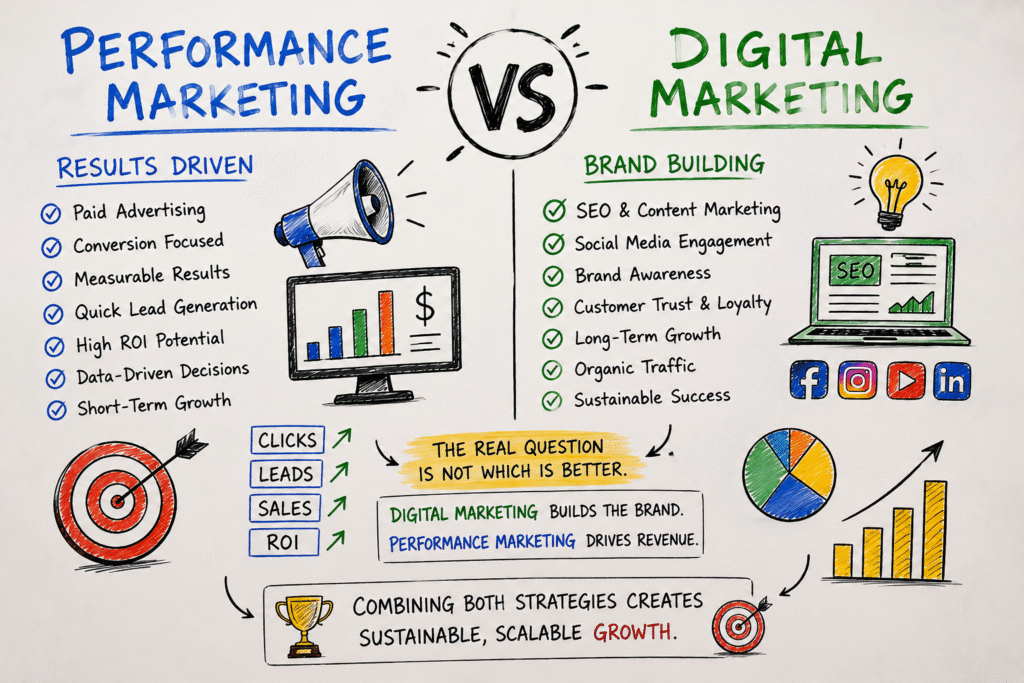
Performance Marketing vs Digital Marketing: Understanding the Real Difference in 2026
Introduction: Why This Comparison Matters
What is Digital Marketing?
Digital marketing is a broad term that includes all marketing efforts conducted through digital channels. It encompasses every online activity used to promote a brand, product, or service.
It leverages platforms such as search engines, social media networks, websites, and email to reach and engage audiences. Digital marketing is not limited to advertising; it includes both organic and paid strategies designed to build long-term visibility. Understanding digital marketing is essential when comparing Performance Marketing vs Digital Marketing , as it represents the broader marketing framework that supports overall business growth.
Core Components of Digital Marketing
Digital marketing typically includes:
- Search Engine Optimization (SEO)
- Content Marketing
- Social Media Marketing
- Email Marketing
- Affiliate Marketing
- Online Reputation Management
- Paid Advertising
These elements work together to create a comprehensive digital presence. In the discussion of Performance Marketing vs Digital Marketing , these channels help businesses establish authority, attract potential customers, and maintain consistent engagement across multiple touchpoints.
Main Goal of Digital Marketing
The primary objective of digital marketing is long-term brand growth. It focuses on:
- Building awareness
- Establishing authority
- Generating organic traffic
- Creating customer loyalty
- Strengthening brand credibility
Unlike purely sales-driven strategies, digital marketing builds a foundation that supports sustained business growth. Results may take time, but they compound over months and years. This long-term approach is one of the most important distinctions in Performance Marketing vs Digital Marketing , where digital marketing emphasizes brand value and sustainable visibility rather than immediate conversions alone.
What is Performance Marketing?

Performance marketing is a results-driven approach where advertisers pay only when a specific measurable action occurs. These actions include clicks, leads, purchases, downloads, or registrations.
Instead of paying for exposure alone, businesses pay for performance.
Core Principle of Performance Marketing
The core principle is simple: pay for outcomes, not impressions.
Campaigns are designed around clear performance metrics. Every dollar spent is tied to measurable data, allowing marketers to track return on investment precisely.
Key Objectives of Performance Marketing
Performance marketing focuses on:
-
Immediate lead generation
-
Direct sales growth
-
High return on ad spend (ROAS)
-
Measurable ROI
-
Rapid scaling
It is highly analytical and depends on continuous optimization.
Digital Marketing vs Performance Marketing: Key Differences
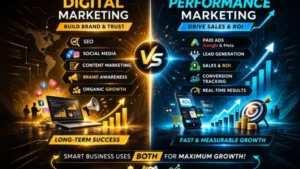
Although performance marketing operates within digital channels, their strategies differ significantly.
1. Strategic Approach
Digital marketing is long-term and brand-oriented. It focuses on building a strong online presence through SEO, content marketing, social media, email marketing, and website optimization. The goal is to increase brand awareness, trust, customer engagement, and long-term business growth. Since digital marketing nurtures relationships with potential customers over time, it may take several months to deliver significant results, but it creates a sustainable foundation for future success.
When discussing Performance Marketing vs Digital Marketing, digital marketing stands out for its ability to build authority, improve organic visibility, and strengthen customer relationships. One of the key differences in Performance Marketing vs Digital Marketing is that digital marketing focuses on sustainable growth rather than immediate conversions. Businesses analyzing Performance Marketing vs Digital Marketing often choose digital marketing to create long-term brand value and market credibility.
Performance marketing is short-term and conversion-focused. It relies on data-driven campaigns such as Google Ads, Meta Ads, affiliate marketing, and paid search to generate measurable actions quickly. Businesses can track clicks, leads, sales, and return on investment in real time. This approach allows marketers to optimize campaigns continuously and maximize marketing budgets.
In the debate of Performance Marketing vs Digital Marketing, performance marketing excels at delivering measurable results and rapid growth. Understanding Performance Marketing vs Digital Marketing helps businesses balance brand building with revenue generation. While performance marketing delivers faster results, combining it with digital marketing helps businesses achieve both immediate conversions and long-term brand growth. This is why Performance Marketing vs Digital Marketing should be viewed as complementary strategies rather than competing approaches.
2. Payment Model
Digital marketing often involves fixed investments such as content production, SEO tools, and management fees.
Performance marketing follows measurable pricing models like:
-
Cost Per Click (CPC)
-
Cost Per Lead (CPL)
-
Cost Per Acquisition (CPA)
-
Return on Ad Spend (ROAS)
You pay based on performance metrics.
3. Focus Area

Digital marketing prioritizes storytelling, engagement, and authority building.
Performance marketing prioritizes conversion rates, revenue growth, and funnel efficiency.
4. Sustainability
Advantages of Digital Marketing
Long-Term Brand Equity
High-quality content and SEO efforts can generate traffic for years without constant advertising costs.
Trust and Credibility

Educational blogs, videos, and consistent social engagement build customer trust.
Lower Long-Term Acquisition Cost
Once systems are established, acquiring customers organically becomes more cost-effective.
Relationship Building
Email marketing and community engagement nurture long-term loyalty.
Advantages of Performance Marketing
Instant Results
Campaigns can generate leads or sales within hours of launch.
Precise Targeting

Advanced targeting tools allow businesses to reach specific audiences based on behavior and demographics.
Key Advantages of Performance Marketing
Clear ROI Measurement
Every campaign can be tracked, analyzed, and optimized using real-time data. Marketers can measure clicks, leads, conversions, customer acquisition costs, and revenue, making it easier to identify what works and improve campaign performance.
• Scalability
Successful campaigns can be scaled quickly by increasing budgets, expanding audience targeting, or launching campaigns across multiple platforms. This allows businesses to accelerate growth without waiting months for results.
• Faster Results
Unlike organic marketing strategies that require time to gain traction, performance marketing can generate traffic, leads, and sales almost immediately after launch.
• Precise Audience Targeting
Advanced targeting options enable businesses to reach users based on demographics, interests, behaviors, locations, and purchasing intent, improving campaign efficiency.
• Budget Control
Businesses can set daily or monthly budgets, adjust spending based on performance, and allocate resources to the highest-performing channels.
• Data-Driven Optimization
Continuous testing of ad creatives, landing pages, keywords, and audience segments helps maximize conversions and reduce wasted ad spend.
• Increased Lead Generation
Performance marketing focuses on driving measurable actions, making it highly effective for generating qualified leads and boosting sales.
• Greater Competitive Advantage
Businesses that leverage performance marketing effectively can respond quickly to market trends, customer behavior, and competitor activities, ensuring sustained growth and profitability in a dynamic digital landscape.
Disadvantages of Each Approach
Digital Marketing Limitations
-
Slow initial results
-
Dependence on platform algorithms
-
Continuous content production required
-
ROI can be difficult to measure early on
Performance Marketing Limitations
-
Can become expensive
-
Ad fatigue reduces effectiveness
-
Heavy platform dependency
-
Results stop when ads stop
Branding vs Conversion: The Core Distinction

The fundamental difference lies in focus.
Digital marketing builds brand recognition and trust. It shapes how customers perceive your business over time.
Performance marketing drives immediate action. It converts attention into measurable revenue.
Branding creates long-term memory. Conversion generates short-term revenue.
Both are necessary, but they serve different stages of the business growth cycle.
Budget Allocation Strategy
Digital marketing investments often include:
-
Content creators
-
SEO tools
-
Social media management
-
Website optimization
Performance marketing investments typically include:
-
Advertising budget
-
Creative testing
-
Analytics tools
-
Funnel optimization
Businesses must decide whether they prioritize slower organic growth, faster paid growth, or a hybrid approach.
Real-World Scenario Comparison
Consider three businesses launching an online store.
Business A focuses only on SEO and content marketing. Growth is slow initially but becomes stable and sustainable over time.
Business B relies solely on paid advertising. Sales begin immediately but fluctuate depending on campaign performance.
Business C combines organic strategies with paid campaigns. Organic traffic builds authority, while paid ads accelerate conversions and retarget potential customers.
In competitive markets, the hybrid strategy usually performs best.
The Role of Data and Analytics
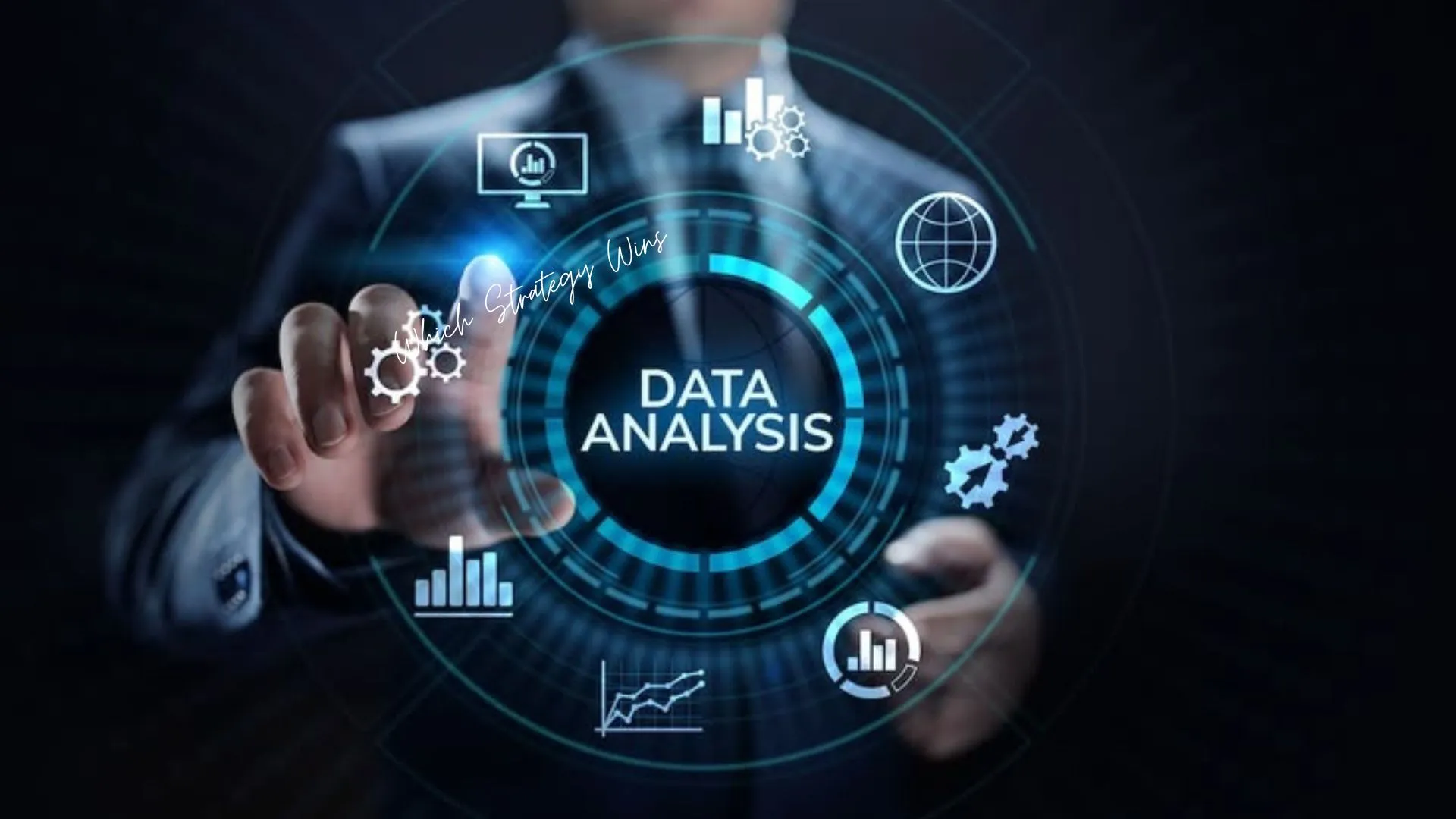
Performance marketing is driven by data. Metrics such as conversion rate, customer acquisition cost (CAC), and return on ad spend (ROAS) influence daily decisions and campaign optimization. One of the key distinctions in Performance Marketing vs Digital Marketing is the level of emphasis placed on real-time performance metrics and immediate business outcomes.
Digital marketing also uses analytics, but it often measures broader indicators such as traffic growth, audience engagement, brand awareness, and online visibility. In performance marketing, numbers guide immediate adjustments and budget allocation. In digital marketing, strategy evolves gradually to build sustainable growth. Understanding these measurement differences is essential when evaluating Performance Marketing vs Digital Marketing for your business goals.
When Should You Choose Digital Marketing?
Digital marketing is ideal if:
- You are building a new brand
- You want long-term authority
- You have a limited advertising budget
- You prioritize organic traffic
- You value trust and market positioning
It is especially effective for service providers, consultants, freelancers, and personal brands seeking sustainable growth.
When Should You Choose Performance Marketing?
Performance marketing works best if:
- You need immediate revenue
- You are launching a new product
- You operate in eCommerce
- You have validated product-market fit
- You require measurable ROI
It is most effective when audience targeting, conversion tracking, and sales funnels are clearly defined and optimized.
The Future in 2026 and Beyond
Marketing in 2026 is increasingly powered by artificial intelligence, automation, and advanced data analytics. Both digital marketing and performance marketing are becoming more sophisticated through AI-driven optimization, predictive targeting, personalization, machine learning, and advanced attribution modeling.
Businesses that rely solely on one approach risk stagnation. The future favors integration. The ongoing evolution of Performance Marketing vs Digital Marketing demonstrates that successful brands will combine long-term brand-building strategies with measurable performance campaigns. Companies that effectively integrate both approaches will be better positioned to maximize growth, improve customer acquisition, and maintain a competitive advantage in the years ahead.
Conclusion: Which Strategy Wins?

The real question is not which strategy is better.
Digital marketing builds the brand.
Performance marketing drives revenue.
Companies that integrate both intelligently create sustainable, scalable growth. A balanced approach reduces risk, strengthens authority, and maximizes profitability. Understanding Performance Marketing vs Digital Marketing is essential for businesses that want to achieve both short-term conversions and long-term brand success.
Why Combining Both Strategies Matters
• Stronger Brand Recognition – Consistent digital marketing increases visibility and keeps your brand top-of-mind for potential customers.
• Faster Lead Generation – Performance campaigns deliver immediate traffic, inquiries, and sales opportunities.
• Higher Customer Trust – Valuable content, SEO, and social engagement establish credibility and industry authority.
• Improved Return on Investment (ROI) – Brand awareness campaigns make paid advertising more effective and cost-efficient.
• Better Customer Retention – Long-term digital marketing nurtures relationships and encourages repeat business.
• Data-Driven Decision Making – Performance marketing provides measurable insights that help refine future strategies.
• Reduced Business Risk – Relying on both organic and paid channels creates a more stable growth model.
• Sustainable Competitive Advantage – Businesses with strong branding and optimized performance campaigns outperform competitors over time.
When evaluating Performance Marketing vs Digital Marketing, the most successful companies recognize that these strategies work best together. In 2026 and beyond, businesses that combine brand-building with measurable performance marketing will dominate their industries, attract loyal customers, maximize ROI, and achieve long-term market leadership.
author : harshad